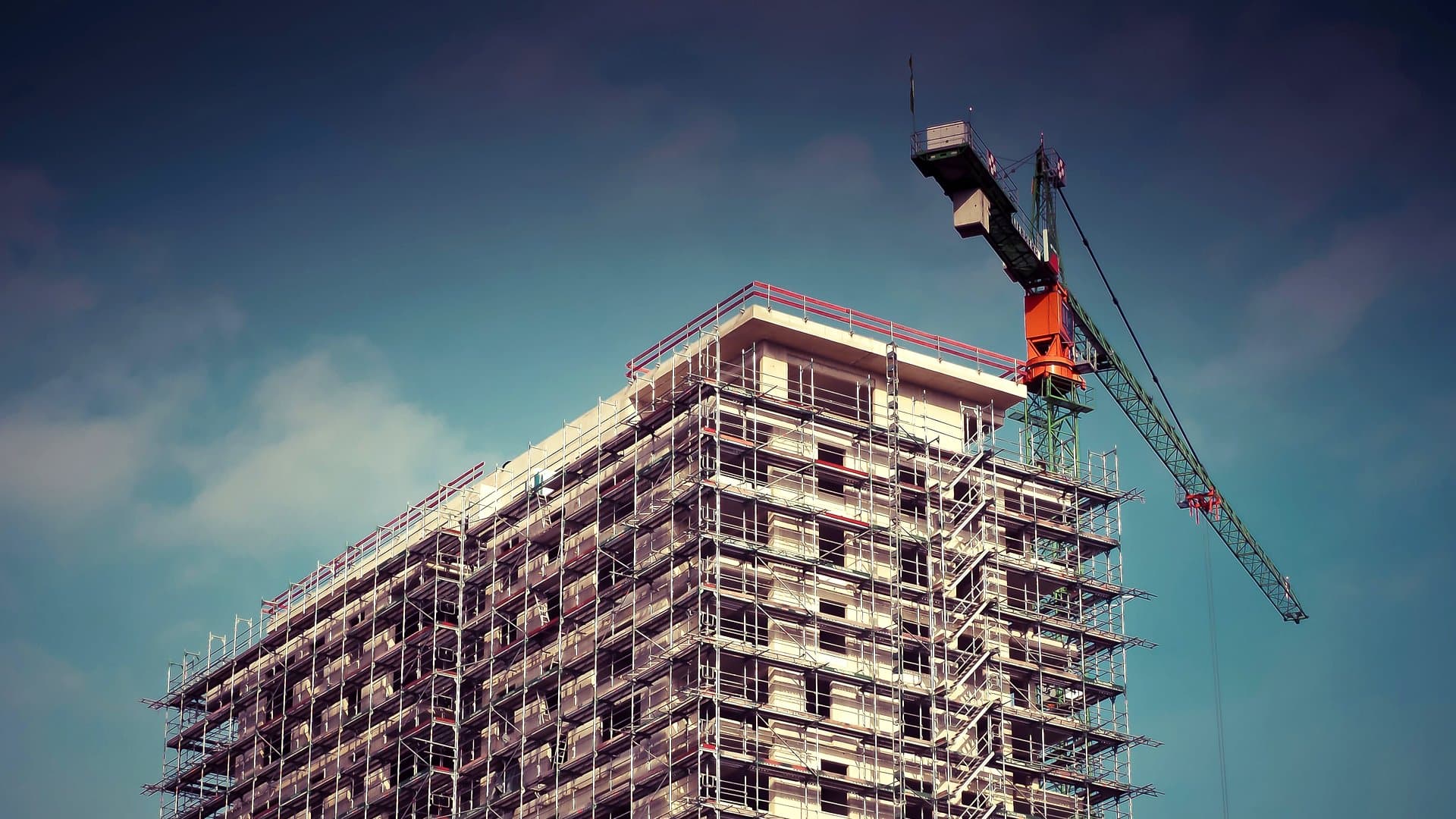
Scope risk management
Design starts three years before construction, and the rack specs it was drawn around change more than once before the hall is built. CIM reads every revision against the last, flags the misses and clashes while they are still drawings, and cites each finding to the sheet - so they are resolved before they arrive as RFIs.
Trusted by the builders delivering Australian projects








“CIM Build pointed to new opportunities to de-risk project documentation and procurement.”
 David Chandler OAMFormer NSW Building Commissioner
Where the exposure starts
Designed three years out, against requirements that keep moving
Design begins around three years before construction, with the buffer built in for permitting and delivery. Nothing holds still across that window. Rack data is out of date within a month or two of release, densities and cooling approaches change, and the design philosophy the job started under is not the one it finishes under. At the same time the boom has pulled experienced consultants into other work, so more of the set is produced by people seeing a data center for the first time. Design misses are the result, and they account for around half of every variation register - each one small on its own, and each one a decision that has to be made without stalling the job.

Where it costs you
Every RFI is time you have not got
A site change made in 2D only clashes during installation, months later
A structural or architectural miss costs more time than any services clash
The gap in your risk register
The bottleneck is human review capacity
Every revision lands as hundreds of sheets across civil, structural, architectural and services, and one design manager reads them between consultant calls and site walks. The misses slip past the desk and come back as RFIs and variations that get paid to keep the job moving, while review capacity stays flat and the schedule absorbs the difference.
Introducing CIM
Scope risk, managed from concept design to turnover
With CIM, your team gets through the analysis faster and catches more of what matters. Every revision comes back as flagged findings, cited to the page, ready to be signed off and sent straight to the right register - in your spreadsheets or in Aconex, Procore or ACC.
Swipe for the next screen
Design risks · L3 fit-out
Drawings read against the specification
Checked 14 Mar
Drawings
- A-301 Rev DLevel 3 plan
- A-501 Rev CWindow schedule
- A-601 Rev DDoor schedule
Specification
- Access cl. 4.2Corridor widths
- Glazing cl. 3.4Glass types by location
- Hardware cl. 5.2Fire door closers
DR-121Corridor at grid C is 3'-9"; spec cl. 4.2 requires 4'-0"A-301 Rev DAccess cl. 4.2Conflict
DR-114Glazing spec cl. 3.4 calls for 10.38 laminated; A-501 schedules 6mm temperedA-501 Rev CGlazing cl. 3.4Conflict
DR-116Door hardware spec cl. 5.2 wants closers on every fire door; A-601 lists 4 withoutA-601 Rev DHardware cl. 5.2Review
Every sheet read against the clauses it touches. Each conflict lands in the register with the sheet and the clause beside it.
A-301 Rev D · Level 3 plan
Grid C · opened from DR-121
Conflict
Corridor width at grid C: 3'-9" measured on the sheet, 4'-0" required by cl. 4.2.
Set read 14 Mar, 08:40 - 3 issues against the specification
Six components.
Built as one.
The whole system
Project intelligence, working as one.
Your models, data, Elements, knowledge, safeguards and delivery connect inside one system. Every revision adds context. Every finding brings the evidence with it.
Every component is already at work. Scroll to explore its role in the whole.
Scroll to explore ↓
Outcomes
The turnover date stops depending on who read the drawings.
The ambiguities that generate RFIs, found before issue
Every revision read within hours of it landing
Civil, structural and architectural read against the specs
Your past findings running as checks on every new set
What the industry says
“CIM Build pointed to new opportunities to de-risk project documentation and procurement. It's pleasing to see how the transformation of construction is accelerating now that the serious players have embraced what good looks like. The days of starting projects with only part documentation are now in the rear view mirror.”
David Chandler OAM
Former NSW Building Commissioner
Why we built CIM
“I've sat through too many design meetings where everyone assumed someone else had checked it. Drawings were technically ‘issued’, procurement moved and the risk only showed up once money was already committed. CIM exists to identify those risks early - before they turn into arguments, delays, or margin erosion.”

Kevin Le
Co-Founder of CIM Build · a decade managing construction projects