Feature
Scope of works
A trade-by-trade scope register, built from the documents.
Scope between packages is where money leaks. CIM reads the drawings and the specification into a scope register for each trade, with the sheet and clause behind every line, ready to match against the quotes that come back.
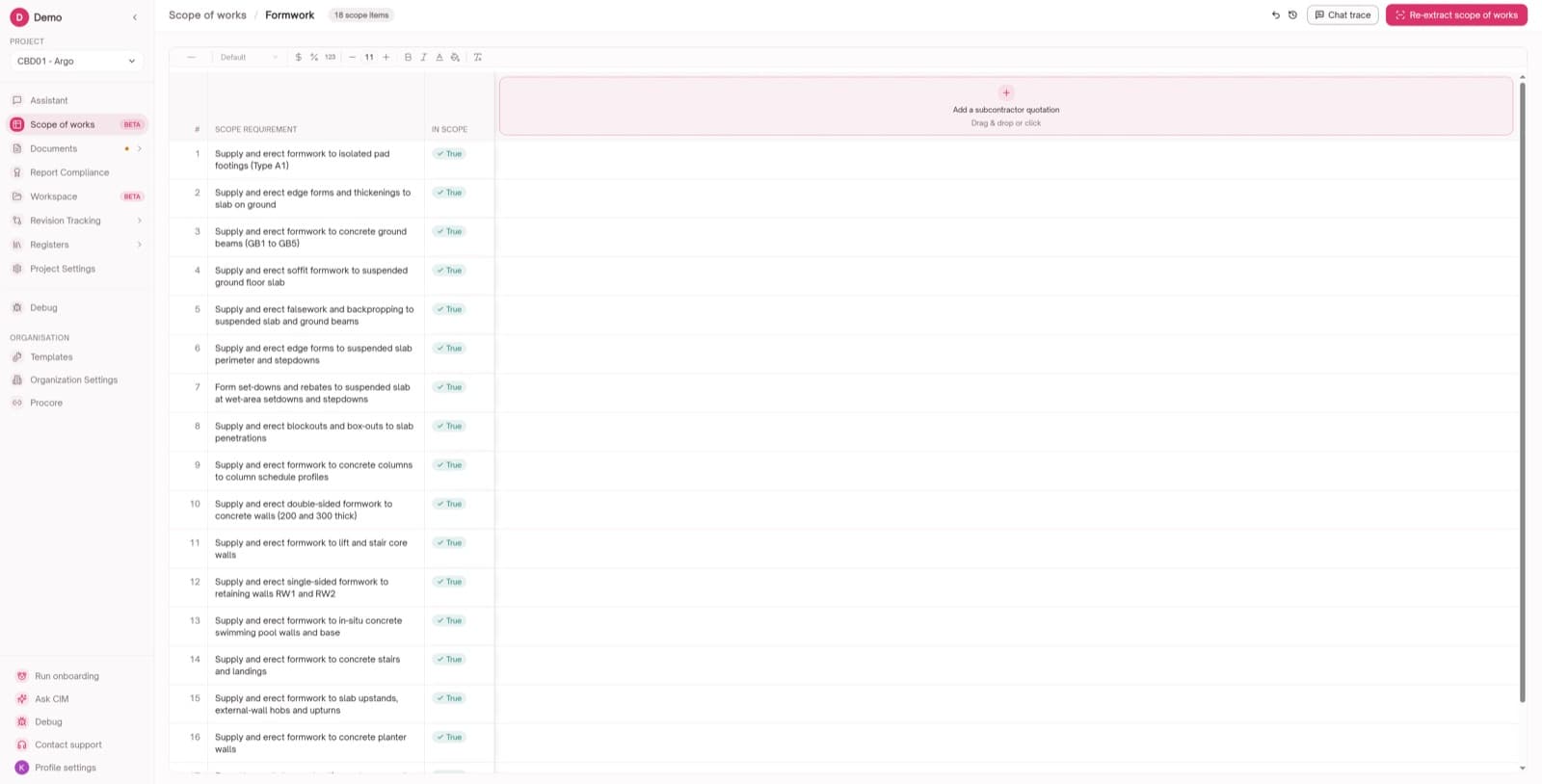
A scope register per trade, matched against the quotes that came in.
The old way
Thirty trades, and the set read once per trade
The screed belongs to whoever loses the argument
The waterproofer prices to the drawings, the tiler prices to the drawings, and the work between them is settled on site at your cost.
Thirty trades means reading the set thirty times
So the scope of works gets written from memory and the last job's template.
Exclusions are checked against memory
A quote comes back with exclusions and the estimator matches them to what they remember the drawings showing.
With CIM
A scope register per trade, matched against the quotes before the package is let
A scope register for every trade, from the documents
What the drawings and specification say about each trade, in one place, in the order the work happens, with the sheet and clause on every line.
The gap shows up while both packages are still open
Quotes match against the register and exclusions line up against the scope they exclude. Closing it costs nothing.
The package that goes to market is defensible
Every scope item cites where it came from.
What it does for your team
Builders
The gap between two packages, before either is signed
A scope register per trade, matched against the quotes that come back, so the screed between trades has an owner.
Developers
A complete package out to market
What the documents say about each trade, in one place, before the job is priced.
Consultants
What your set does and does not cover
Trade by trade, with the sheet and clause behind every line.