 Procore
 Autodesk Construction Cloud
 Aconex
 SharePoint
 Google Drive
 Outlook
4 min read
Estimating-to-delivery handover: carrying the tender assumptions into construction
Keep the tender basis, effective quotes, exclusions, budget allowances and open decisions with the project delivery team.

Explore the platform
From the first tender set to the final revision.
Ideas on construction document control, scope management, and delivering projects without the surprises.
Keep the tender basis, effective quotes, exclusions, budget allowances and open decisions with the project delivery team.
Pull every requirement out of the fire engineering report into a register, map each one to the sheet or schedule that should show it, and recheck the register on every revision. Here is how to do it, and where it usually goes wrong.
Prepare the agreed reference set before comparing later drawings in CIM.BUILD. Keep document issues, identifier mappings and unresolved pairing exceptions clear throughout the review.
Reconcile original quote totals, compare quantities and scope allowances, and select alternatives without double counting. A synthetic example shows every adjustment.
Use CIM.BUILD’s report-to-drawing findings to separate a missing source, a conflicting requirement and evidence that still needs review before assigning the next action.
Use CIM.BUILD to compare the drawings you priced with the proposed contract drawings, inspect the evidence behind each finding and work through the commercial implications in a change register.
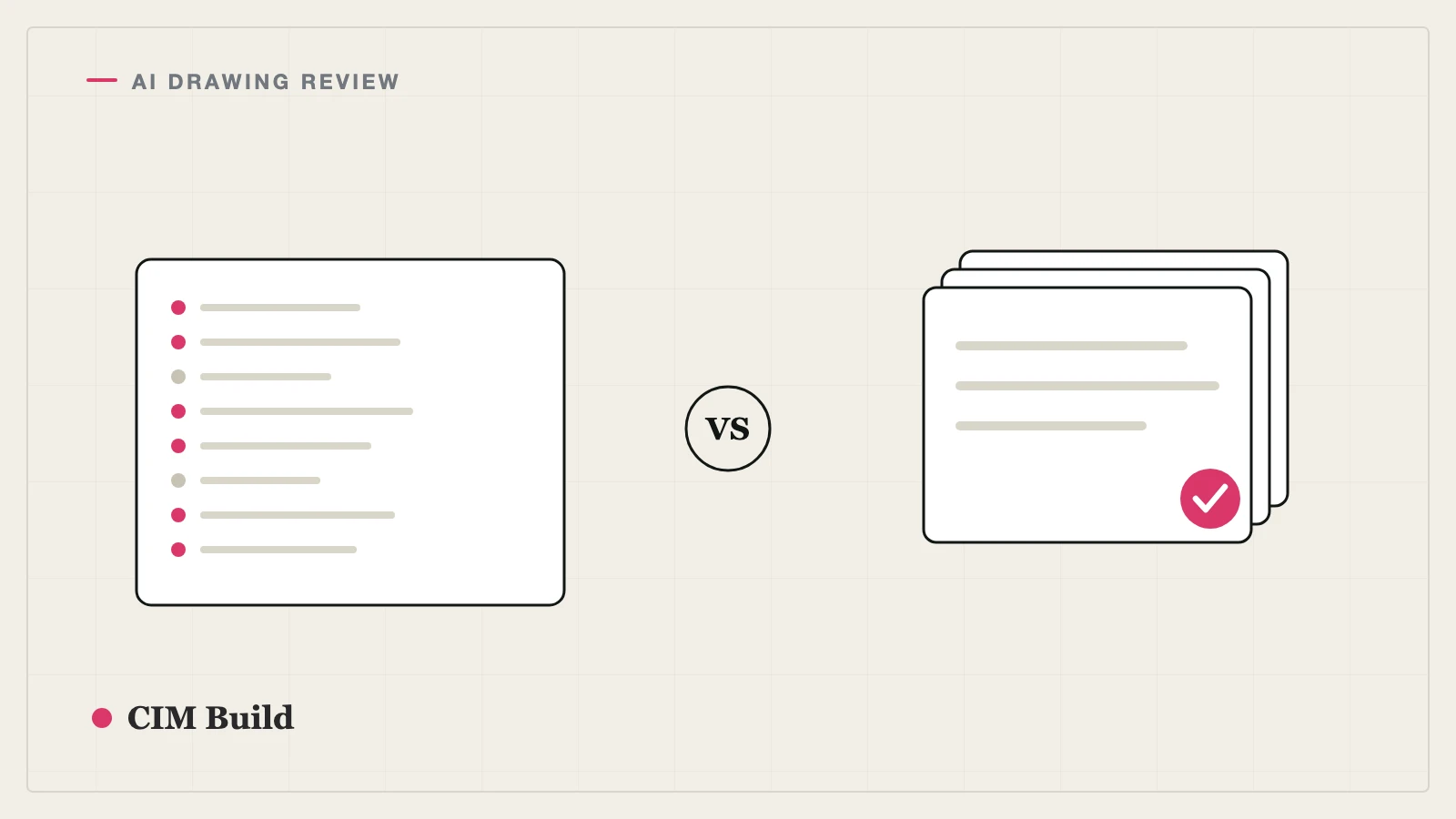
LightTable is fast, capable AI peer review for design - and its headline is finding more issues, faster. But more isn't the goal; the right issues for the stage is. Here's how CIM.BUILD differs, and where the other alternatives fit.
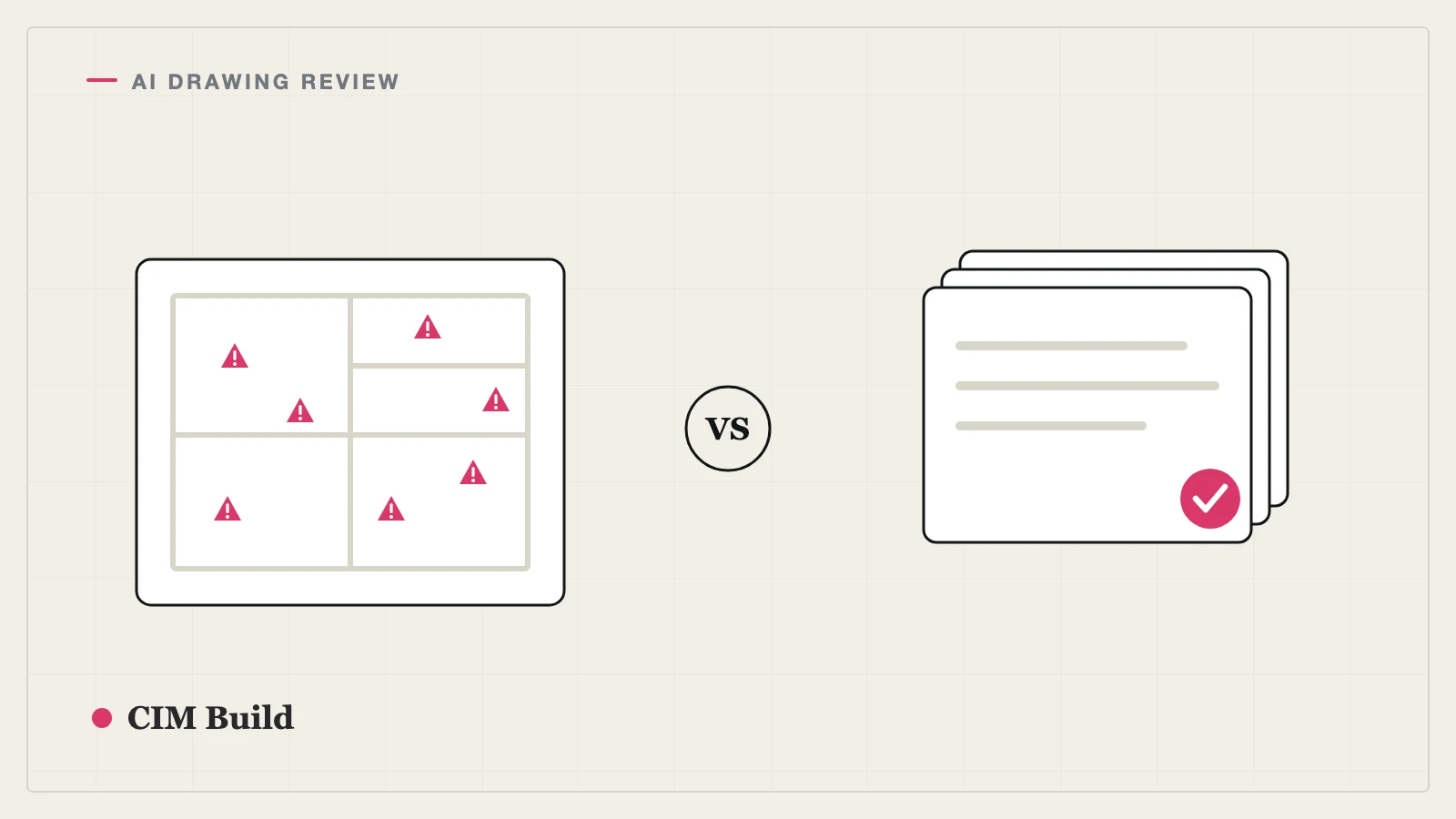
Primepoint reads drawings as connected systems and flags clashes and gaps - genuinely capable. The real question is what you check at each documentation gate. Here's how CIM.BUILD differs, and where the other alternatives fit.
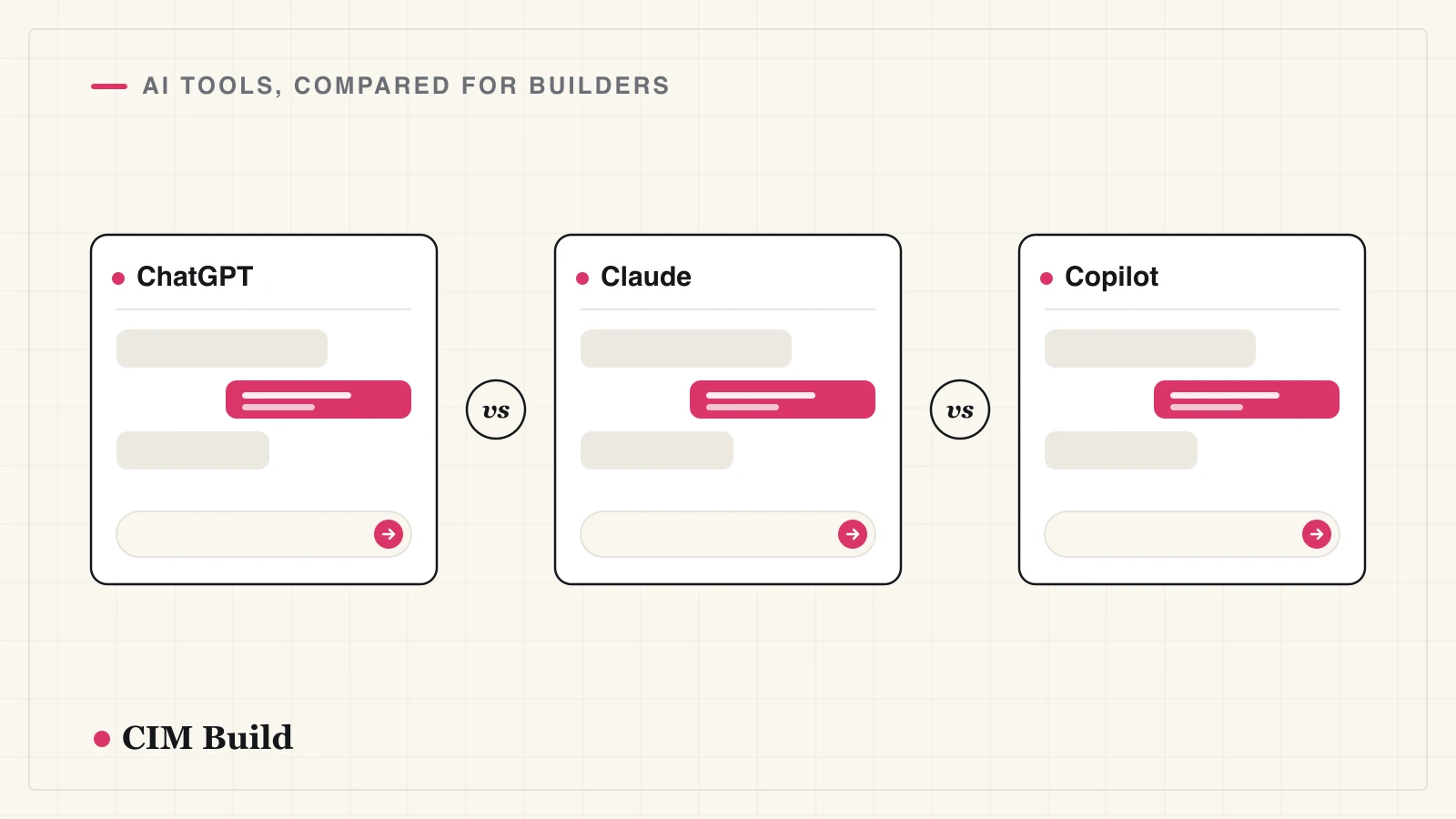
ChatGPT, Claude Cowork and Microsoft Copilot are capable general tools — but the design & construct document jobs run across the whole set. A table comparing all three with CIM.BUILD on spec-to-drawings, brief-to-drawings, cross-discipline coordination and revision tracking.
Bluebeam Revu is built for one person marking up one sheet. D&C builders carry risk across the whole pack, every revision. Here are the alternatives - and why CIM.BUILD is built for the way D&C teams actually work.
Trunk Tools detects real issues on a drawing set - but it runs the same checks every time. D&C builders need to check different things at different documentation gates. Here's how CIM.BUILD is built around that, and where the other alternatives fit.
General-purpose AI like ChatGPT and Claude is already on your team's phones. Here's where it earns its keep on a construction business, where it quietly fails, and the line you can't let anyone cross.
The AI drawing review category got crowded fast, and every demo looks great. These nine questions cut through the pitch so the tool you sign for is the tool you needed.
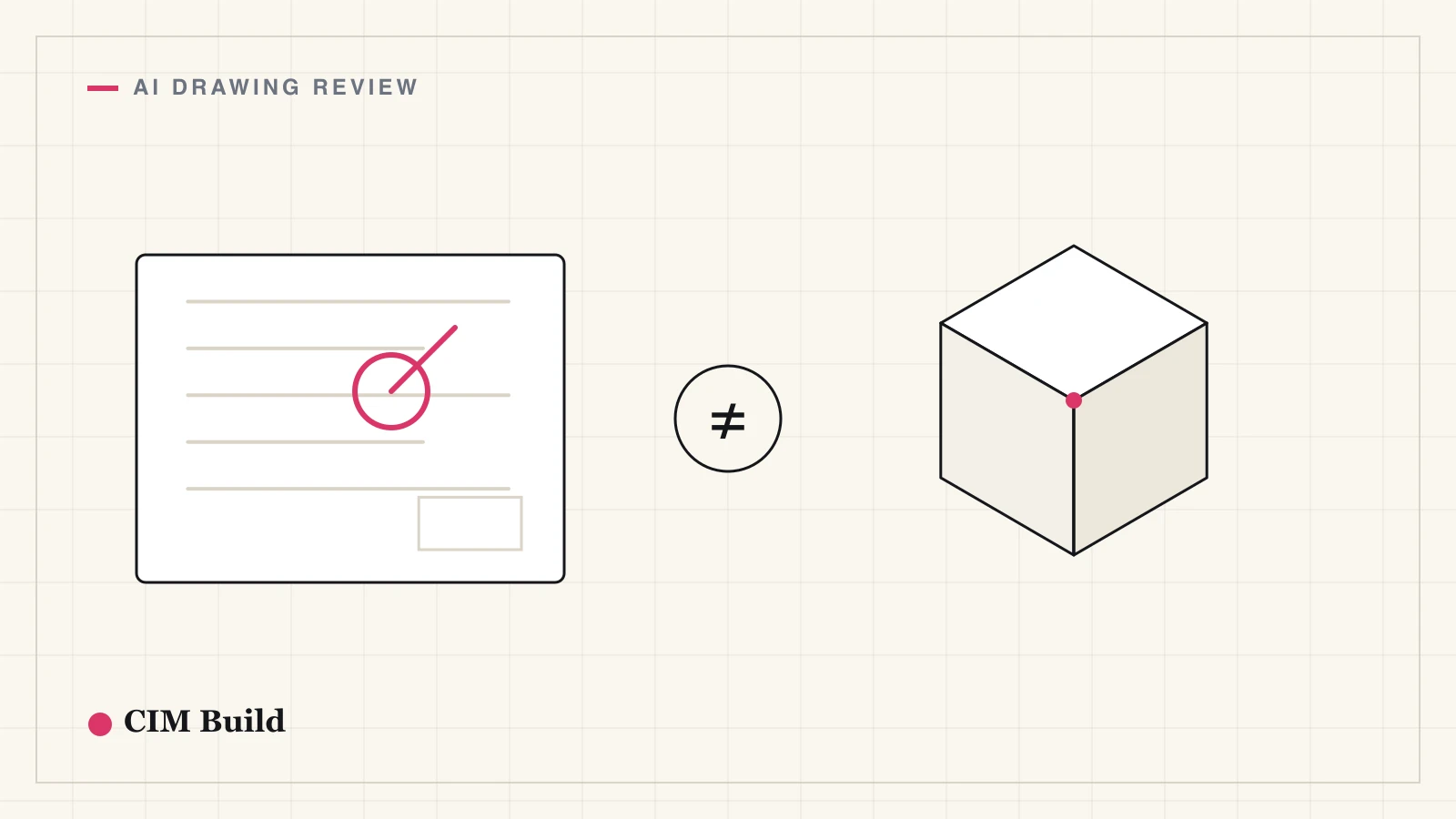
Treating them as substitutes is how GCs end up paying for both and getting the value of neither. They cover different failure modes - here's how to tell which one you actually need.
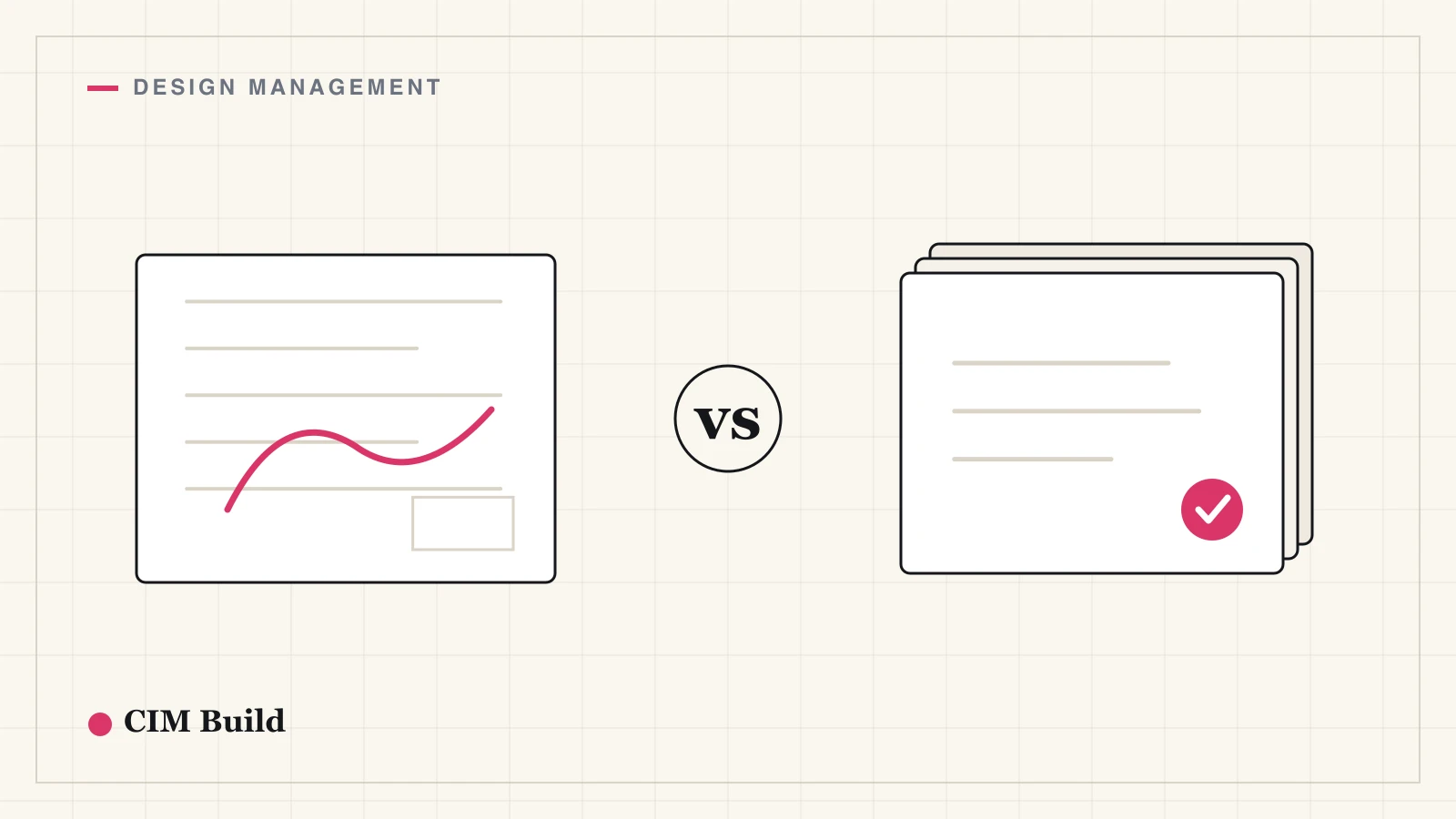
Bluebeam Max is an AI assistant inside a per-user markup tool. CIM.BUILD is a design-management workflow that audits the whole project pack on every revision. Most builders run both - here's why.